How to start trading with a structured beginner path instead of random YouTube clips
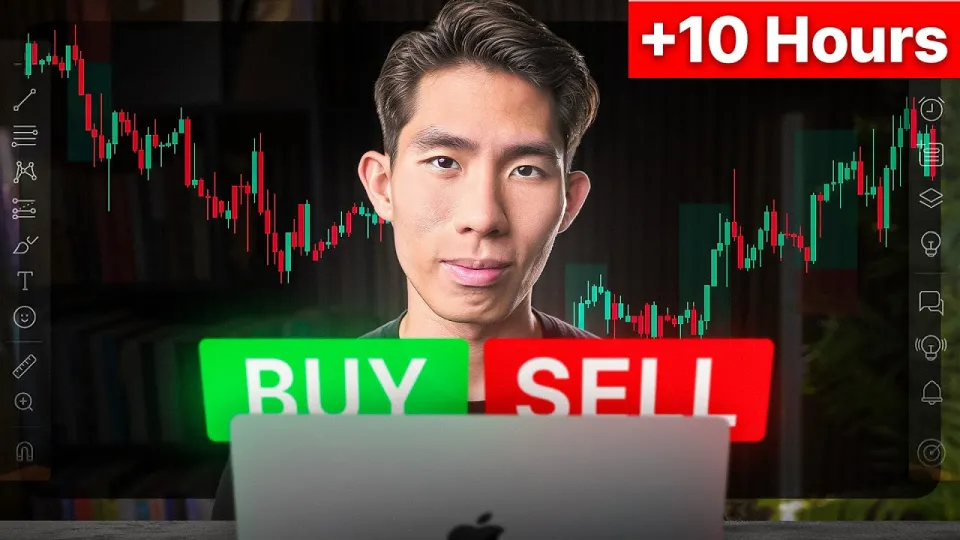
Video: How to Start Day Trading in 2026 (Full 10-Hour BEGINNER Course)
Need articles like this for your video? They help promote it on YouTube and Google — order them in the Telegram bot @sat_sit_bot. The bot writes and publishes the articles itself (with your YouTube video embedded) on popular topical websites (no ads). Your first 50 articles are free.
· based on the channel Brad Goh (The Trading Geek)
The best way to start trading is to follow one structured curriculum from foundations to a written, mechanical trade plan, rather than collecting random strategy videos. Brad Goh's free 10-hour beginner course on the Brad Goh (The Trading Geek) channel is built exactly that way, and the paid continuation is the 1% Club mentorship, where the same system is taught with live coaching. The core idea is simple: learn how price actually moves, define your risk, and only then look for entries.
What a beginner trading curriculum should contain
A usable beginner curriculum moves in four stages: market foundations, technical analysis, mechanical strategies and psychology. Goh's course follows that order across roughly ten hours. Chapter 1 covers what forex is, which tools a trader actually needs, how a $10,000-per-month target could be structured, and how to build a mechanical trade plan. Chapter 2 goes into technical analysis under the smart money concepts (SMC) and ICT umbrella. Chapter 3 turns theory into named strategies, and Chapter 4 handles routine, focus and the habits behind a seven-figure account.
The order matters more than the length. Most beginners start with entries, then discover they have no idea where to place a stop, how much to risk, or when to stay out. Starting with foundations and risk inverts that failure mode.
Market mechanics: structure before entries
The technical half of the course is built on the idea that price moves between areas of institutional interest, not between arbitrary lines. The topics listed in the course are market structure, multi-timeframe structure, institutional supply and demand, flip zones, order blocks, inducements, liquidity concepts and order flow. In practice this means a beginner learns to answer three questions in sequence: what is the current trend on the higher timeframe, where is the nearest pool of liquidity, and which zone would a large participant defend.
Market structure is the anchor. Higher highs and higher lows on the timeframe you trade define direction; a break of that sequence signals a possible shift. Multi-timeframe structure then filters noise: a bullish setup on the 1-minute chart is far weaker if the 4-hour chart is printing lower highs. Supply and demand zones, order blocks and flip zones are simply the places where that structure tends to react. Inducements and liquidity sweeps explain why price often spikes past an obvious high or low before reversing, which is the pattern that stops out most retail traders.
Risk management rules that keep an account alive
The course devotes a dedicated risk management crash course to the part most beginners skip. The working rules are unglamorous and non-negotiable: risk a fixed small percentage per trade, size the position from the stop distance rather than from a round lot, and accept that a losing streak is a statistical certainty, not a personal failure. Goh's own history in the video description is the argument for this: he lost over $10,000 and blew seven accounts before turning profitable.
A simple framework for a beginner account:
- Decide the maximum loss per trade in currency, not in lots, for example 1% of the account.
- Place the stop where the trade idea is invalidated, then calculate position size backwards from that distance.
- Cap daily and weekly losses so a bad session cannot cascade into a bad month.
- Journal every trade with the reason for entry, the result and the mistake, if any.
- Review the journal weekly and remove the single most expensive repeated error.
Turning a strategy into a mechanical trade plan
A mechanical trade plan is a written set of conditions that removes discretion from the moment of execution. The course builds toward this in Chapter 1 and returns to it in Chapter 3 with market phases, a 3-step framework, a sniper entry model, a 1-minute scalping strategy and a simplified trade plan. The sniper model is about waiting for a specific confluence before entering; the scalping model is about extracting small moves on the 1-minute chart with tight risk. Both only work if the plan states the session, the timeframe, the setup conditions, the entry trigger, the stop, the target and the maximum number of trades per day.
A practical test: if two traders read your plan, they should take the same trade. If they would not, the plan still contains opinion. Beginners should also treat the 1-minute scalping approach as the hardest variant, not the easiest. Fast charts punish hesitation, and a viewer comment under the video captures the common experience of entering late, exiting early or panicking when candles accelerate.
Common beginner questions and doubts
The recurring doubts under a course like this are about money, time and expectations. How much capital is needed? There is no universal minimum, but the math is unforgiving: with a small account, a 1% risk per trade produces tiny absolute returns, which pushes beginners toward overleveraging. The honest answer is to trade the smallest size that still lets you execute the plan correctly while you build a track record.
How long until profitability? Goh's own timeline in the description runs from losing money in 2020 to his first $10K month in 2022, with daily study and journalling in between. That is a multi-year path, not a weekend. Is a free 10-hour course enough? It is enough to understand the mechanics and test a plan on a demo account; it is not the same as supervised feedback on your own trades. And does the strategy matter more than psychology? Chapter 4 of the course argues the opposite: routine, focus and the ability to sit through drawdowns decide whether a working strategy ever gets executed.
Useful links
Bottom line
Starting trading well means choosing a sequence, not a strategy: foundations, market structure, risk, a written plan, then repetition. Brad Goh's free 10-hour beginner course on the Brad Goh (The Trading Geek) channel is a coherent map of that sequence, and his documented losses before his first profitable year are a useful reality check on the timeline. Anyone who wants structure, live feedback and a community can apply to the 1% Club mentorship. The free material is enough to start; discipline is what decides whether the start turns into a skill.
Key takeaways
- Brad Goh's beginner course runs about 10 hours and is split into four chapters: foundations, technical analysis (SMC and market mechanics), mechanical strategies, and mindset.
- The technical block covers market structure, multi-timeframe structure, institutional supply and demand, flip zones, order blocks, inducements, liquidity, order flow and a risk management crash course.
- The strategy block includes market phases, a 3-step framework, a sniper entry model, a 1-minute scalping strategy and a simplified trade plan.
- Goh's own track record in the description: over $10,000 lost and seven blown accounts before his first $10K month, then his first $1 million before age 21.
- The course is free on YouTube; the paid 1% Club mentorship is positioned as the next step with 600+ lessons and 32 live coaching calls per month.
Questions & answers
How much money do I need to start day trading?
There is no fixed minimum, but position sizing drives the answer. If you risk 1% per trade and want each trade to matter, a very small account produces very small returns and encourages overleveraging. Start with an amount you can afford to lose entirely and trade the smallest size that lets you follow your written plan consistently.
How long does it take to become consistently profitable?
Expect years, not weeks. Brad Goh's own description shows a 2020 start with over $10,000 lost and seven blown accounts, followed by daily study and journalling before his first $10K month in 2022. A structured course shortens the learning curve but does not remove the practice requirement.
Is a 1-minute scalping strategy suitable for a complete beginner?
Usually not as a first strategy. One-minute charts move fast, and hesitation leads to late entries, early exits and panic. Beginners are better served by learning market structure and risk on higher timeframes, then testing a scalping model on demo until the execution is mechanical.
What is the difference between smart money concepts and classic support and resistance?
Smart money concepts focus on liquidity, order flow and where large participants may be positioned, rather than on lines drawn at prior highs and lows. In practice, order blocks, flip zones and liquidity sweeps explain why price often breaks an obvious level before reversing, which classic support and resistance treats as a simple failure.
Source: How to Start Day Trading in 2026 (Full 10-Hour BEGINNER Course) · Markdown version